
A sudden, unexpected odor inside your vehicle cabin is more than an olfactory nuisance, it is frequently the first warning sign of an underlying mechanical failure, a compromised electrical system, or a developing biological hazard. Too many drivers respond to a strange vehicular stench by hanging a scented air freshener over the rearview mirror, inadvertently masking a symptom while a critical components deteriorates beneath the floorboards or inside the engine bay.
I. Unmasking the Sweet and Toxic Vapor Profiles

Diagnosing Cooling Loop Breaches and Heater Core Contamination
One of the most deceptive odors a driver can encounter is a distinctly sweet, maple-syrup-like aroma circulating through the cabin vents when the climate control system is actively engaged. This scent is caused by atomized ethylene glycol, the primary chemical compound found in automotive engine coolant. When a pinhole leak develops within your heater core, the small, radiator-like infrastructure buried deep beneath your dashboard panel, pressurized coolant vaporizes directly into the HVAC plenum box, instantly fouling the interior air block.
Ignoring this sweet scent carries severe consequences for both human health and vehicle longevity. Breathing atomized glycol vapors over extended periods can irritate respiratory pathways, while the underlying fluid loss will rapidly deplete your engine’s cooling reserves, inviting catastrophic thermal warping and head gasket failures. If your cabin continuously smells of maple syrup, or if you notice an oily, translucent film baseline forming along the interior base of your front glass, it is a non-negotiable indicator that your vehicle requires professional intervention and a potential windshield repair.
Execute an Under-Hood Pressure Test:
Connect a cooling system pressure pump to the radiator cap filler neck to locate hidden micro-fissures along the heater core hoses and firewall gaskets.
Inspect the Passenger-Side Footwell Carpeting:
Pull back the floor mats and check for damp, sticky residue or localized pooling, which confirms a physically ruptured heater core housing.
II. Remediating Biological and Mildew Accumulations
Sanitizing Evaporator Coils and Deploying Professional Odor Remediation
A persistent, damp odor resembling wet gym socks or stagnant mold is typically triggered by a biological accumulation deep within the vehicle’s air conditioning system. During standard summer operations, the air conditioning evaporator core extracts massive moisture from the ambient air, creating a continuously wet, dark environment. If the vehicle’s primary condensate drain tube becomes blocked by highway debris or organic leaves, this water pools within the climate control housing, turning the internal aluminum fins into a breeding ground for mold, mildew, and airborne bacteria.
When standard home remedies like spraying commercial disinfectant aerosols into the cowl intake fail to permanently neutralize the stench, the biological colony has likely formed a thick, resilient biofilm across the core matrix. To resolve this persistent biological issue completely, vehicle owners must seek out specialized car odor removal services. Professional remediation teams bypass basic surface masking by deploying industrial ozone generators, deep-reaching chemical foam flushes injected directly into the evaporator housing, and high-intensity antimicrobial misting systems that neutralize biological spores at a microscopic molecular level.
Clear the Evaporator Condensate Drain Line:
Insert a flexible nylon wire or apply low-pressure compressed air upward through the underbody drain tube to clear accumulated mud or leaf blockages.
Run the Climate Control Fan on High:
Get into the habit of running your vehicle’s ventilation fan on high with the A/C compressor disabled for the final two minutes of any drive to dry out internal core surfaces completely.
III. Isolating Friction-Induced and Electrical Burning Smells
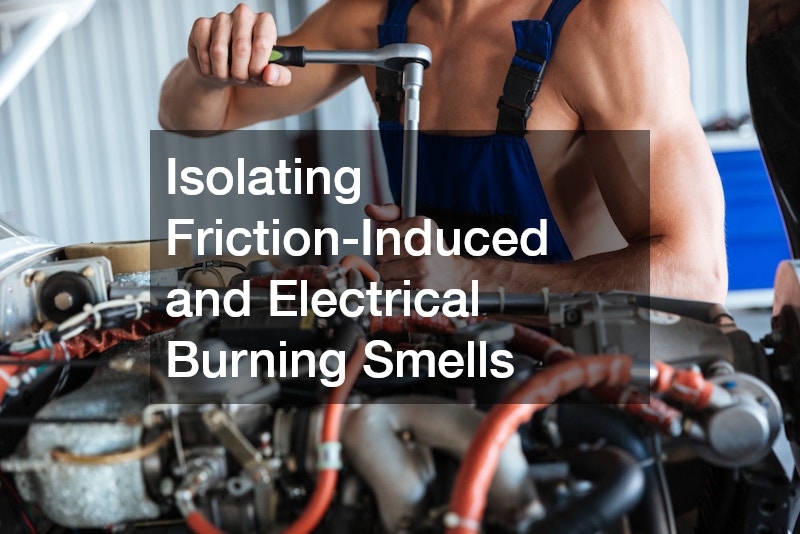
Pinpointing Seized Calipers and Melting Wiring Insulations
A sharp, acrid scent resembling burning rubber or fried electronics demands immediate roadside attention and rapid diagnostic verification. If the odor possesses a distinct metallic edge and grows more intense when descending steep hills or navigating heavy stop-and-go urban traffic, the root failure is likely friction-induced heat within your mechanical chassis. Seized brake caliper sliders, warped steel rotors, or collapsed flex lines will cause a brake pad to remain continuously pressed against the spinning rotor face, superheating the friction material far past its engineered thermal thresholds and generating an alarming, pungent stench.
Alternatively, if the burning smell resembles a melting plastic compound or an ozone-heavy electrical short, the crisis resides within your vehicle’s high-current distribution wiring grids. Corroded ground wires, aftermarket accessory splices executed without proper fuse ratings, or worn alternator bearings will create extreme localized resistance, melting the protective plastic insulation surrounding copper wiring arrays. Prioritizing targeted auto repairs at the first hint of an electrical scent is a vital safety rule that prevents localized wire smoldering from escalating into an uncontainable engine bay fire.
Measure Individual Wheel Hub Temperatures:
Utilize a non-contact infrared thermal laser gun to check individual wheel hub temperatures following a drive; a seized caliper will display a reading significantly higher than adjacent wheels.
Inspect the Under-Dash Fuse Block Panels:
Look for deformed plastic fuse housings, discolored terminal pins, or charred circuit board elements that signal active electrical overloading.
IV. Correcting Kinetic Steering Faults and Fluid Contaminations
Balancing Mechanical Chassis Tracking and Shielding Rubber Elements
While minor cosmetic blemishes or slight interior plastic rattles can be safely ignored, subtle kinetic shifts along your vehicle’s steering track are frequently connected to serious mechanical wear that compromises long-term driving safety. Extreme tire wear caused by neglected steering geometry can drag the vehicle rubber unevenly across high-speed pavement, creating a faint, localized burning rubber scent that confuses diagnostics. Booking precision car alignments at a certified service center ensures that your vehicle’s camber, caster, and toe settings are calibrated back to factory specifications, eliminating erratic highway tracking and preventing premature tire friction wear.
Audit Structural Toe and Camber Coordinates:
Ensure the technicians utilize laser-guided diagnostic alignment racks to adjust your vehicle tracking to within single-millimeter factory tolerances.
Inspect Constant Velocity (CV) Axle Boots:
Check the accordion-style rubber boots along both front axles for deep cracks or visible grease leakage that indicates a structural boot breach.
V. Analyzing Pungent Sulfur and Heavy Drivetrain Smells
Detecting Exhaust System Damage and Gearbox Oil Failures
A thick, nauseating stench resembling rotten eggs or raw sulfur inside your passenger cabin is an unshakeable indicator of severe exhaust system or emissions control degradation. This specific sulfur aroma is caused by hydrogen sulfide gas escaping from your tailpipe, a direct byproduct of a failing or structurally melted catalytic converter. When the internal precious-metal substrate inside your exhaust canister breaks down or becomes contaminated by unburnt raw fuel, it can no longer safely convert harmful exhaust elements into clean emissions, forcing toxic, sulfur-heavy fumes back up through your floorboards and into your cabin air blocks.
Alternatively, if the cabin fills with a heavy, bitter odor that smells like burnt mechanical oil coupled with a metallic edge, the failure point resides inside your complex automated transmission assembly. Transmission fluid features a distinct chemical profile that emits a highly specific, sharp smell when scorched. If your internal gear sets are slipping, or if the system’s cooling fluid lines become choked with metal shavings, the internal friction temps will spike far past safe operational boundaries, burning the fluid and destroying internal clutch packs.
Execute an Exhaust Backpressure Diagnostic Scan:
Connect a mechanical pressure gauge to the oxygen sensor port to measure downstream exhaust resistance, a blocked catalytic converter will show elevated backpressure levels.
Audit the Quality of the Gearbox Lubricant:
Pull the automatic transmission dipstick to inspect the fluid color; healthy fluid should display a bright translucent pink hue, whereas burned fluid will look dark brown and smell bitter.
VI. Selecting Qualified Fleet Service Centers

Vetting Independent Structural Facilities for Complex Overhauls
When a vehicular odor points to a complex mechanical failure within your engine block, emissions stack, or drive axles, where you choose to have the hardware serviced determines the ultimate durability of the repair. Trying to resolve major structural faults at generic quick-lube locations can leave your asset vulnerable to substandard parts fitment and inaccurate diagnostics. Savvy car owners seek out fully certified, independent auto repair shops that feature master technicians holding advanced credentials and possessing model-specific factory scan tools.
Vetting an independent service facility requires analyzing their diagnostic infrastructure, technical warranty packages, and on-site machinery pools. A premium facility will offer transparent, itemized digital estimates backed by clear photographic proof of component failures, allowing you to review the exact engineering defects before authorizing a teardown. By partnering with a top-tier independent garage, you guarantee that your intricate automotive sub-systems are repaired using premium components that preserve your vehicle’s long-term resale equity.
Verify Technician Certifications:
Confirm that the shop’s lead diagnostic technicians hold current master certifications from the National Institute for Automotive Service Excellence (ASE).
Inquire About Nationwide Parts Warranties:
Prioritize facilities that back their mechanical labor and replacement components with a minimum 24-month or 24,000-mile comprehensive warranty network.
VII. Protecting High-Stress Gearbox Assets
Utilizing Dedicated Hydraulic Restoration Facilities for Long-Term Scale
When an analytical fluid check reveals that your heavy burning odor is rooted inside a charred, slipping gearbox, taking the vehicle to a generic general garage can lead to misdiagnoses and unnecessary entire-unit replacement recommendations. To protect your repair budget, you must seek out a specialized transmission shop that dedicates 100% of its operational footprint to hydraulic rebuilding and electronic planetary gear diagnostics. These focused mechanical hubs possess advanced torque-converter balancing benches, specialized valve-body testing stations, and custom fluid-flushing tools that allow them to repair specific internal components without forcing you to purchase a completely new factory replacement unit.
Execute a Valve-Body Solenoid Bench Test:
Ensure the facility uses computerized testing equipment to analyze hydraulic pressure responses across individual fluid shift gates before recommending an overhaul.
Perform a Complete Torque-Converter Balance Check:
Verify that internal lockup clutches engage smoothly without generating the extreme friction heat that scorches transmission fluid.
VIII. Mitigating Structural Glass Damage and Moisture Infiltration
Resolving Structural Safety Faults and Preventing Cabin Dampness
Not all strange cabin odors are rooted inside deep mechanical engine components or fluid loops. A persistent, stubborn musty smell that grows noticeably worse after heavy rainstorms can frequently be traced to structural tracking faults or seal failures along your vehicle’s glass perimeters. Microscopic stone chips, unaddressed cracks, or a shifting window pane can easily degrade the structural integrity of your vehicle’s front glass module. When a crack expands across your viewing field, executing rapid windshield repairs is a vital safety prerequisite that prevents structural glass collapse and stops external rainwater from bypassing the primary perimeter adhesives.
When a front glass seal fails, water drains silently down behind the interior plastic pillar moldings, collecting beneath your dashboard insulation pads and deep within your footwell foam layers where it cannot easily evaporate. This hidden water accumulation rapidly triggers extensive mold colonies that release a heavy, sour stench into the cabin. By scheduling immediate, precision structural glass remediation at the first hint of an external leak, you stop moisture infiltration at the threshold, keeping your interior cabin dry, clean, and completely free from biological scent hazards.
Deploy Ultrasonic Leak-Detection Probes:
Use advanced audio wave scanners along the interior glass perimeters while applying ultrasonic frequencies outside to pinpoint microscopic seal voids instantly.
Execute Immediate Resin-Injected Windshield Repairs:
Inject high-viscosity optical resins into minor stone chips.
IX. Maximizing Thermal Defenses and Interior Protection

Elevating Cabin Comfort Levels via Advanced Solar Rejection Films
Once your vehicle’s mechanical fluid loops are completely sealed and your structural glass perimeters are verified as weather-tight, your final priority should be implementing proactive defenses to prevent high cabin temperatures from triggering chemical odors. Intense solar heat radiation entering through large glass surfaces can rapidly raise interior cabin temperatures to over 140°F (60°C) during summer months. This extreme thermal load causes interior vinyl dashboards, synthetic seat plastics, and adhesive backings to undergo chemical outgassing, releasing a strong, unpleasant plastic chemical scent into your breathing zone.
To lower these extreme internal thermal loads and eliminate heat-induced chemical odors, you should partner with premier auto glass tinting companies or a trusted auto shop to install advanced ceramic or carbon-infused solar rejection films across your vehicle’s glass assets. Unlike old-fashioned dyed window tints that merely darken the glass, modern ceramic multi-layer films leverage nano-technology to block up to 99% of harmful ultraviolet radiation and deflect over 60% of total solar infrared heat energy.
Select Multi-Layer Nano-Ceramic Film Stacks:
Prioritize advanced ceramic window films that deliver maximum infrared heat rejection metrics while maintaining clear, code-compliant optical visibility for night driving.
Verify State Legal Window Tint VLT Boundaries:
Ensure your chosen tint shade complies fully with your regional department of transportation laws regarding maximum allowable Visible Light Transmission (VLT) percentages.
Taking complete control of your vehicle’s interior air quality requires moving past basic masking sprays and committing to a disciplined, analytical approach to automotive diagnostics. A strange odor inside your passenger cabin should always be treated as an essential, real-time diagnostic signal pointing directly to an underlying mechanical or structural adjustment need. By matching unique scent profiles with targeted engineering solutions, you protect your vehicle’s long-term resale value and guarantee a safe driving experience for your loved ones. Lead your maintenance routines with foresight: identify the root chemical failures early, partner with independent specialists, and ensure your automotive asset continues to perform with absolute precision across the miles ahead.